Ce petit matin du mercredi 5 août,
je découvre, sur le site de ResMusica, et sous la plume de Maciej Chiżyński,
et en français cette fois,
cet article d’hommage-ci : Leon Fleisher, la persévérance malgré tout…
…
…
Nous venons d’apprendre le décès de Leon Fleisher à l’âge de quatre-vingt-douze ans, le 2 août dernier, l’un des plus grands pianistes américains des années 50 et du début des années 60, puis un chef d’orchestre et pédagogue acclamé. Il est mort d’un cancer dans un hôpital de Baltimore, selon son fils Julian qui a déclaré que Fleisher avait enseigné et dirigé des cours de maître en ligne pas plus tard que la semaine dernière.
…
…
…
…
L’enfant prodige
…
…
Leon Fleisher est né à San Francisco le 23 juillet 1928. Ses parents, Isidore et Bertha Fleisher, étaient des immigrants juifs, chacun gérant un magasin de chapeaux ; son père, chapelier, venait d’Odessa, tandis que sa mère était de Pologne. Leon fut attiré par le piano dès son plus jeune âge. Déjà quand il avait quatre ans, il répétait à l’oreille les phrases musicales qu’il avait entendues des leçons de piano de son frère aîné Raymond. Sa mère a rapidement décidé que Leon devrait étudier le piano, en plaisantant qu’il deviendrait soit le premier président juif des États-Unis, soit un pianiste de concert. Sa mère fut si attachée à la formation musicale de Leon qu’après deux semaines au jardin d’enfants, pendant lesquelles il s’opposait vigoureusement à la sieste, elle le retira de l’école publique et engagea des professeurs afin qu’il puisse se consacrer à la pratique du piano. Il fit ses débuts en public à huit ans.
…
…
La mère de Leon trouva également le moyen de le faire connaître auprès de deux chefs d’orchestre de San Francisco, Pierre Monteux et Alfred Hertz, qui à leur tour persuadèrent le pianiste Artur Schnabel de prendre Leon comme élève en 1938, alors qu’il avait neuf ans, et cela malgré la principe de Schnabel de ne pas enseigner aux enfants. Celui-ci accepta d’être son professeur à condition que le jeune adepte ne donne plus de concerts. À neuf ans, il devint donc l’un des rares enfants prodiges à étudier avec Schnabel qui lui enseigna une tradition directement issue de Ludwig van Beethoven par l’intermédiaire de Carl Czerny et Teodor Leszetycki _ merci de ces précisions.
…
…
En 1944, Schnabel fit la première exception à la règle et permit à Fleisher de jouer le Concerto pour piano n° 1 en ré mineur de Brahms sous la baguette de Monteux dirigeant l’Orchestre symphonique de San Francisco, puis avec l’Orchestre philharmonique de New York au Carnegie Hall, également sous la direction de Monteux. Noel Strauss, en faisant la critique de la prestation donnée au Carnegie Hall pour The Times, remarqua que Fleisher s’était « imposé comme l’un des artistes de clavier américains les plus remarquablement doués de la jeune génération ». En 1945, au festival d’été de Ravinia dans l’Illinois, Leon Fleisher joua à nouveau le Concerto de Brahms, ainsi que le Concerto pour piano n° 2 de Franz Liszt, avec Leonard Bernstein à la tête de l’Orchestre symphonique de Chicago. L’été suivant, à Ravinia, il joua quatre concertos sous la direction de William Steinberg et George Szell, qui _ sur le champ _ s’empressa d’engager Fleisher pour se produire avec le Cleveland Orchestra.
…
…
En 1949, bien que Fleisher ait joué avec de nombreux orchestres américains et qu’il ait donné des récitals dans tout le pays, ses engagements commencèrent à se tarir. L’année suivante, il s’installa à Paris et resta en Europe _ voilà _ jusqu’en 1958, vivant aussi aux Pays-Bas et en Italie. En tant qu’expatrié, Fleisher fut le premier Américain à remporter la médaille d’or au Concours musical international Reine Élisabeth de Belgique à Bruxelles, en 1952 _ oui. À la suite de cette victoire, il devint l’un des solistes les plus recherchés dans les meilleures salles de concert du monde. Le succès lui valut une longue liste d’engagements en Europe et raviva l’intérêt des orchestres, directeurs et promoteurs de concerts américains.
…
…
Coopération pénible _ du moins difficile _ avec Szell
…
…
Lorsque Szell et le Cleveland Orchestra signèrent un nouveau contrat avec le label Epic / Columbia Masterworks en 1954, Fleisher se vit invité à devenir le principal soliste _ rien moins ! _ du chef hongrois pour ses enregistrements des concertos pour piano. Signant de sa part un prestigieux _ en effet ! _ contrat d’exclusivité avec eux, il offrit, pour son premier album, une plongée profonde dans la Sonate en si bémol majeur D. 960 de Franz Schubert que Tim Page, journaliste du Washington Post, qualifia de « transcendante ». Par la suite, il se fit connaître par ses interprétations marquantes des concertos pour piano de Beethoven et Brahms, réalisées de 1958 à 1963 avec le Cleveland Orchestra sous la direction de George Szell. Ceux de Brahms comptent « parmi les plus abouties de toute l’histoire du disque », considérés comme l’un des témoignages les plus vivants et les plus émouvants _ dont acte _ de ces œuvres.
…
…
George Szell ayant été l’un des chefs les plus rigoureux _ certes ! _ de la vieille école, Fleisher dut faire des efforts _ voilà. Dans ses mémoires, il déclarait : « L’atmosphère des sessions de Beethoven et de Brahms était très chargée, mais ensuite, tout pouvait s’arranger avec Szell. Ses exigences étaient très élevées, ses critères étant généralement bien supérieurs à ceux des autres. La difficulté, s’il y en avait, était qu’il estimait que toute personne avec laquelle il acceptait de travailler devait automatiquement adhérer _ tout simplement _ à ses normes. Si cela n’était pas le cas, il devenait irritable. On ne pouvait pas le blâmer, vraiment. Le Cleveland Orchestra avait un énorme respect pour lui. Et il avait besoin de respect, pas d’amour. Il n’était pas Leonard Bernstein. »
…
…
Fleisher et Szell ont également enregistré le Concerto pour piano n° 25 de Mozart, les concertos pour piano de Grieg et de Schumann, les Variations symphoniques de Franck et la Rhapsodie sur un thème de Paganini de Rachmaninov. Le jeu du pianiste, aux traits apolliniens _ voilà, voilà _, s’y distingue par des sonorités aussi chaleureuses dans les aigus que profondes dans les graves. Par ailleurs, son répertoire discographique englobe des compositions de Debussy, tout comme des explorations du répertoire américain : des pages de Roger Sessions et d’Aaron Copland.
…
…
Une maladie grave
…
…
C’est peu après son retour aux États-Unis, à la fin des années 1950, que Fleisher a accepté d’enseigner à l’Institut Peabody, un conservatoire de musique de l’université Johns Hopkins situé à Baltimore (Maryland) _ la ville où Leon Fleisher vient de mourir. Cette nouvelle activité ne l’empêcha pas de continuer à suivre un programme chargé de concerts et d’enregistrements, mais son rythme de travail s’avéra trop intense _ oui _, avec en plus huit heures de pratique quotidienne. Après ces années, il écrivit qu’« il y avait toujours plus à atteindre, et plus à réaliser, et plus de profondeur musicale à mettre en place, et derrière tout cela, se cachait le terrifiant risque d’échec. » L’échec _ dû au stress _ n’était pas loin.
…
…
Durant l’hiver 1963, le pianiste remarqua ce qu’il décrivit comme une _ simple _ paresse de l’index droit, ainsi qu’un « engourdissement diffus » de la main droite. En été _ 1963 _, les quatrième et cinquième doigts de sa main droite commencèrent à se recourber mystérieusement vers sa paume. Le moment était désastreux pour lui. Il avait prévu de célébrer le 20eanniversaire de ses débuts à New York avec une saison chargée qui comprenait une vingtaine de représentations à New York seulement et une tournée en Union soviétique au printemps 1964, au cours de laquelle il devait être le soliste dans le Concerto pour piano n° 25 de Mozart avec Szell et le Cleveland Orchestra. Les concerts finirent par être annulés _ voilà _ et Fleisher alors au sommet de ses capacités se retrouva cruellement mis sur la touche par une maladie neurologique rare qui lui fit perdre _ totalement, dès lors _ l’usage de sa main droite. À trente-six ans, il ne pouvait plus jouer avec ses deux mains, ce qui lui causa un « profond malaise et un grand désespoir ». En 1991 _ soit 27 ans plus tard… _, le diagnostic posé fut celui d’une dystonie focale, un trouble neurologique lié au syndrome de stress répétitif. Parfois, disait-il, il était si découragé qu’il envisagea le suicide. Mais il se rendit compte que la musicalité et le caractère incisif qui avaient été si largement admirés dans ses premières années pouvaient être exploités d’autres manières.
…
…
…
…
L’exploration du nouveau répertoire
…
…
Après deux ans d’inactivité _ en 1966 donc _, il se fraya un chemin dans l’estimable catalogue de gauche des œuvres composées pour le pianiste Paul Wittgenstein (le frère du philosophe Ludwig Wittgenstein), qui avait perdu son bras droit pendant la Première Guerre mondiale. En 1967, il joua le Concerto pour la main gauche de Ravel et les Diversions de Benjamin Britten avec Seiji Ozawa et l’Orchestre symphonique de Toronto. Quinze ans plus tard _ en 1982, donc _, il enregistra la page de Ravel pour Vanguard, accompagné de l’Orchestre symphonique de Baltimore sous la direction de Sergiu Comissiona.
…
…
En outre, il a gravé les concertos de Prokofiev et Britten, de la musique de chambre de Korngold et Schmidt, et des œuvres pour la main gauche pour piano seul de Saint-Saëns, Scriabine, Godowsky, Blumenfeld et Bach (arrangement par Brahms de la Chaconne de la Partita n° 2 pour violon seul). À propos de cette dernière partition, il déclarait : « Contrairement à la version Busoni de la Chaconne de Bach, celle de Brahms est du pur Bach, pas une note ajoutée ou soustraite. […] L’objectif de Busoni était de développer l’œuvre de Bach ; pour moi, la Chaconne n’a pas besoin d’être développée, c’est un monument monolithique. Toute cette élaboration ne fait que la dénaturer. Mais la faire passer du violon au piano n’a pas d’importance : la musique de Bach est abstraite ; vous pouvez la jouer sur le kazoo, et ça sonne toujours bien. Brahms a fait sa transcription pour Clara Schumann, la femme de Robert Schumann […]. Elle s’était blessée à la main droite et avait besoin de se reposer. Il a fait la transcription de Bach pour l’empêcher de se retrouver à la rue, je suppose. »
…
…
Le compositeur américain William Bolcom composa son Concerto pour deux pianos mains gauches pour Fleisher et son ami proche Gary Graffman qui avait également souffert de problèmes neurologiques à la main droite _ voilà qui est intéressant. L’œuvre fut jouée pour la première fois à Baltimore en avril 1996. Parmi les compositeurs qui lui écrivirent de la musique, on compte également C. Curtis-Smith, Lukas Foss, Leon Kirchner et Gunther Schuller _ ces précisions aussi.
…
…
En 2004, Fleisher créa le Concerto pour piano pour la main gauche de Paul Hindemith, avec l’Orchestre philharmonique de Berlin sous la baguette de Simon Rattle. Cette œuvre avait été écrite en 1923 pour Paul Wittgenstein, mais celui-ci ne l’aimait pas et avait refusé de la jouer _ Paul Wittgenstein était décidément bien difficile à contenter ! Ravel en fit lui aussi l’expérience… Cependant, il avait le droit exclusif d’exécution et gardait la partition, ne permettant à aucun autre pianiste de l’interpréter _ autre trait de caractère de ce pianiste… Le manuscrit a été découvert parmi ses papiers après la mort de sa veuve en 2002. Le 16 juin 2006, Fleisher assura la création française de cette page, en compagnie de l’Orchestre National de France dirigé par Kurt Masur _ c’est très intéressant.
…
…
Enseignement et direction d’orchestre
…
…
Infatigable _ oui _, Leon Fleisher concentra son énergie sur l’enseignement et la direction d’orchestre _ voilà. Hormis ledit Institut Peabody, il donna des cours au Curtis Institute of Music de Philadelphie et au Conservatoire royal de musique de Toronto. Ses étudiants ont compté des grands noms du piano tels qu’André Watts, Yefim Bronfman, Louis Lortie et, récemment, Jan Lisiecki _ oui.
…
…
Avec Dina Koston, il cofonda et codiriga, de 1968 à 2003, les Theater Chamber Players, le premier ensemble de chambre résident de la Smithsonian Institution et du John F. Kennedy Center for the Performing Arts à Washington. C’est au sein de ce groupe qu’il se perfectionna en tant que chef d’orchestre _ voilà. Dans sa carrière, il a notamment été chef associé de l’Orchestre symphonique de Baltimore, directeur musical de l’Orchestre symphonique d’Annapolis et directeur artistique du Tanglewood Music Center (1986-1997) _ toutes précisions intéressantes.
…
…
Le retour triomphal à deux mains
…
…
Leon Fleisher confirma être un excellent pianiste dans le répertoire pour les gauchers _ voilà _, tout en continuant à soigner sa main malade _ en effet : il ne s’avoua jamais vaincu. Pendant trente ans, il a essayé pratiquement tous les remèdes : injections de lidocaïne, thérapie de rééducation, psychothérapie ou traitements de choc. Il tenta de revenir au jeu à deux mains au milieu des années 80, mais ne se sentit pas _ pas encore alors _ assez à l’aise avec sa main droite.
…
…
Ayant subi une opération pour soulager le syndrome du canal carpien, il commenca à retrouver l’usage de sa main droite, ne serait-ce que partiellement et de façon irrégulière. Dans un moment d’audace, il annonça qu’il jouerait le Concerto pour piano n° 4 de Beethoven. Mais à l’approche de l’évènement, il décida de donner les Variations symphoniques de Franck à la place, une œuvre plus courte et moins exposée sur le plan pianistique. Si la plupart des auditeurs trouvèrent que la prestation s’était bien passée, Fleisher n’était pas du tout satisfait _ pas encore… Selon lui, la quantité d’efforts qu’il avait déployés pour contrôler sa main droite l’empêchait d’atteindre la profondeur d’interprétation qu’il espérait, et il abandonna _ alors _ ses projets de retour à un jeu à deux mains.
…
…
Cependant, en 1991, Fleisher trouva un médecin qui expérimentait des injections de botox pour des pathologies comme la sienne. Après quatre années de traitement _ en 1995, par conséquent _, une combinaison du rolfing (une technique de massage en profondeur) et d’injections de botox lui procurèrent un soulagement suffisant pour qu’il puisse reprendre sa carrière _ voilà _ de pianiste à deux mains. Il retrouva l’usage de ses doigts atteints et enregistra de nouveaux albums. À titre expérimental, il joua le Concerto pour piano n° 12 de Mozart avec les Theater Chamber Players en avril 1995, ainsi qu’avec le Cleveland Orchestra et à Tanglewood peu après. « Rien n’était plus doux que la sensation de ces notes qui se mettent en place », avoua-t-il. Par la suite, il reprit prudemment le répertoire qu’il n’avait pas pu jouer pendant plus de trente ans, en construisant le programme de ses récitals avec des œuvres pour deux mains et pour la main gauche, et en exécutant des programmes de piano à quatre mains avec sa femme.
…
…
Après son retour, il fit remarquer _ avec lucidité et courage _ qu’il n’était pas complètement guéri et qu’il ne le serait jamais _ dont acte. Mais il reconnut tardivement que l’incapacité de sa main droite en 1964 lui avait donné une vie musicale beaucoup plus variée _ voilà _ que celle qu’il aurait pu avoir s’il avait pu poursuivre une carrière conventionnelle _ voilà _ de pianiste virtuose.
…
…
En 2004, Vanguard Classics publia le premier disque « à deux mains » _ intitulé ainsi : Two Hands ! _de Fleisher depuis les années 1960, intitulé Two Hands, salué par la critique _ oui. Sur la pochette de cet album, on voit les deux mains de l’artiste. Au menu, des œuvres de Bach, Scarlatti, Chopin, Debussy et Schubert. Son deuxième enregistrement de la dernière sonate de Schubert compte parmi les plus poétiques jamais réalisées. Two Hands est également le titre d’un film sur Fleisher réalisé par Nathaniel Kahn, qui fut nominé pour le meilleur court métrage documentaire dans le cadre de la 79e édition des Oscars.
…
…
Fleisher a été fait commandeur de l’ordre des Arts et des Lettres en 2006 _ année de parution, chez Vanguard de son CD Leon Fleisher the journey _ et a reçu un Kennedy Center Honor l’année suivante. Sa discographie de cette époque comprend, entre autres, le Quintette avec piano de Brahms et les concertos pour piano de Mozart (Clef ResMusica).
…
…
Leon Fleisher fut un artiste allant droit au but _ voilà _, ne cédant rien à l’adversité _ pour la vaincre. Un excellent exemple à suivre _ oui ! _ et l’un des derniers phares _ oui _ parmi les grands héritiers de la vieille école du piano _ c’est cela.
…
…
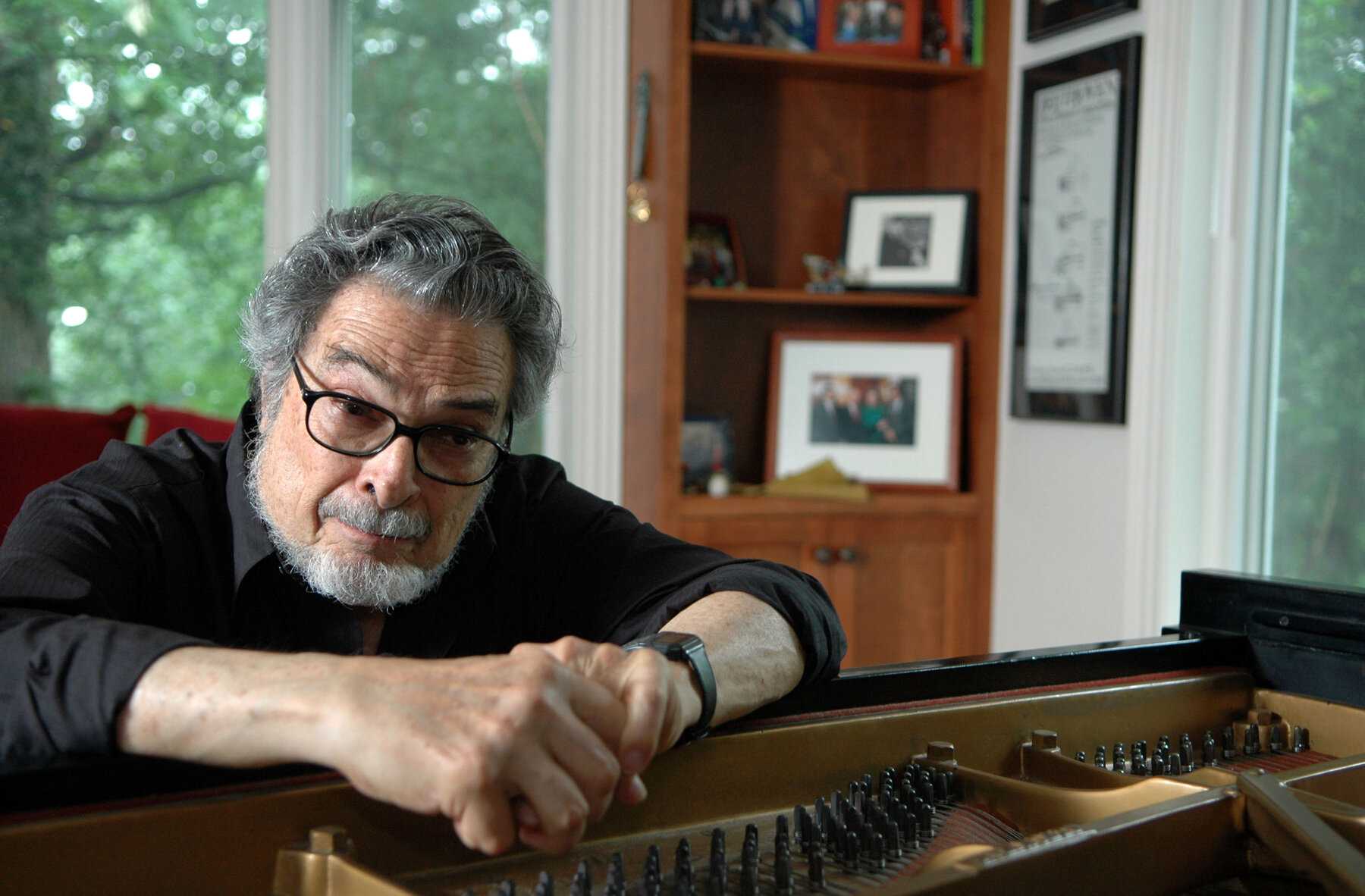
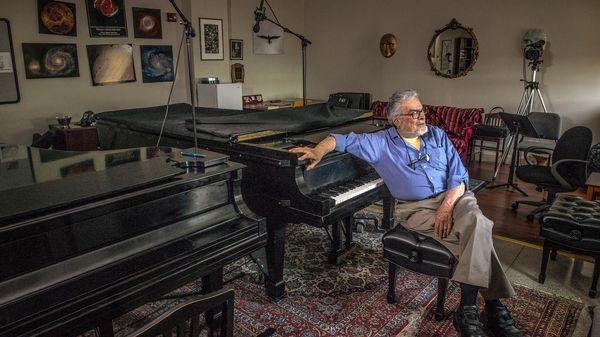
Crédits photographiques : Image de une © Stephanie Kuykendal ; Leon Fleisher au piano © Bill O’Leary/The Washington Post
…
…
…
Soit une bien belle synthèse du parcours musical des 92 années de vie de Leon Fleisher.
…
…
Ce mercredi 5 août 2020, Titus Curiosus – Francis Lippa